I am searching for a list of all colors I can use in PowerShell. Since we need to provide names and no hexnumbers, it's hard to figure out if a color exists or not, at least if you don't know how :))
For example, as -foregroundcolor
write-host "hello world" -foregroundcolor "red" 8 Answers
Pretty grid
$colors = [enum]::GetValues([System.ConsoleColor]) Foreach ($bgcolor in $colors){ Foreach ($fgcolor in $colors) { Write-Host "$fgcolor|" -ForegroundColor $fgcolor -BackgroundColor $bgcolor -NoNewLine } Write-Host " on $bgcolor" } 
Updated colours in newer powershell:
The console colors are in an enum called [System.ConsoleColor]. You can list all the values using the GetValues static method of [Enum]
[Enum]::GetValues([System.ConsoleColor]) or just
[Enum]::GetValues([ConsoleColor]) I've found it useful to preview how the console colors will display with a simple helper function:
function Show-Colors( ) { $colors = [Enum]::GetValues( [ConsoleColor] ) $max = ($colors | foreach { "$_ ".Length } | Measure-Object -Maximum).Maximum foreach( $color in $colors ) { Write-Host (" {0,2} {1,$max} " -f [int]$color,$color) -NoNewline Write-Host "$color" -Foreground $color } } How about checking the help? Like so, get-help write-host will tell you:
[-BackgroundColor {Black | DarkBlue | DarkGreen | DarkCyan | DarkRed | DarkMagenta | DarkYellow | Gray | DarkGray | Blue | Green | Cyan | Red | Magenta | Yellow | White}] [-ForegroundColor {Black | DarkBlue | DarkGreen | DarkCyan | DarkRed | DarkMagenta | DarkYellow | Gray | DarkGray | Blue | Green | Cyan | Red | Magenta | Yellow | White}] I'm not going to write down all ~7million (which you can apparently use now if your terminal can display them), but here are the main ones, all named for you
I've included other things like "bold", underline, and negative.
Just call them like this (fg for foreground, bg for background, and bf/bg for "bright" foreground/background. default to reset and there's fg.default + bg.default too for resetting those individually)
$style.fg.green + 'Im green!' 'I feel a little ',$style.bg.black,' moody' -join '' "Math is pretty $($style.negative)$(191 * 7)$($style.default) too" 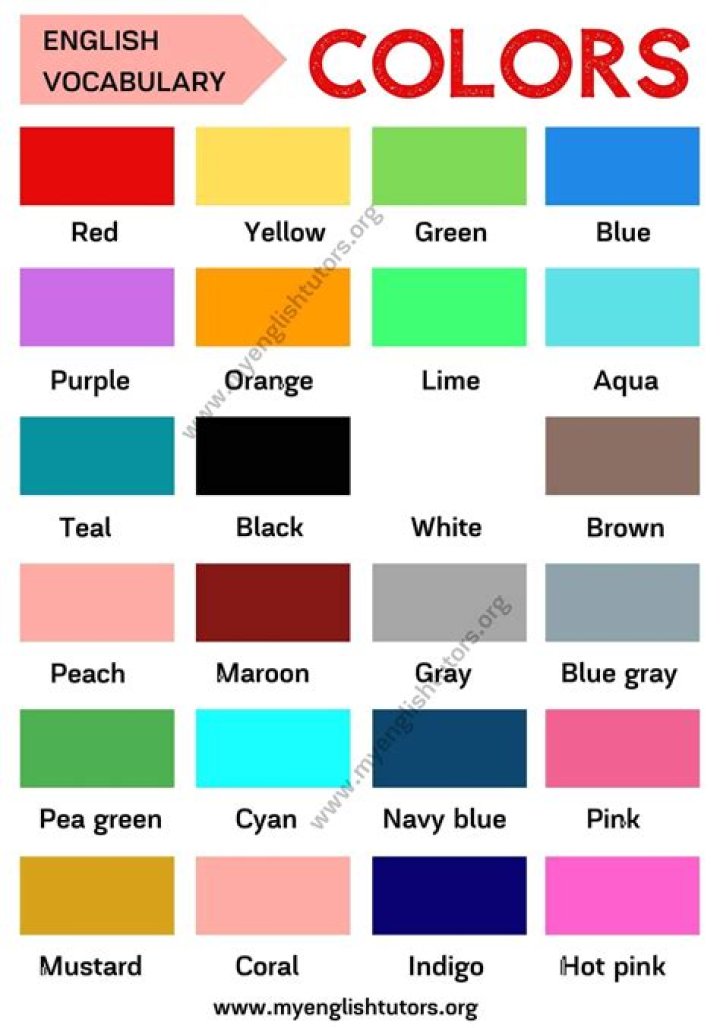
Those 24-bit colours a aluded to? $style.bg.rgb -f 120,32,230. Maybe you're running pwsh on linux or come from a 'nix background? $style.fg.x -f 30 xterm colours will make you feel at home.
#console colours (VT escape sequences) $style=@( 0, 'default', 'bold', 4, 'underline', 24, 'nounderline', 7, 'negative', 27, 'positive', '_fg', 30, 'black', 'red', 'green', 'yellow', 'blue', 'magenta', 'cyan', 'white', 39, 'default', '_bg', 'black', 'red', 'green', 'yellow', 'blue', 'magenta', 'cyan', 'white', 49, 'default', '_bf', 90, 'black', 'red', 'green', 'yellow', 'blue', 'magenta', 'cyan', 'white', '_bb', 100, 'black', 'red', 'green', 'yellow', 'blue', 'magenta', 'cyan', 'white' ) ` | &{ Begin { $sequence="$([char]27)[{0}m" $style=@{ fg=@{ rgb=$sequence -f '38;2;{0};{1};{2}' x=$sequence -f '38;5;{0}' }; bg=@{ rgb=$sequence -f '48;2;{0};{1};{2}' x=$sequence -f '48;5;{0}' }; bf=@{}; bb=@{}; } $current=$style $index=$null } Process { Switch -regex ($_) { '\d' { $index=$_ } '^_' { $current=$style[$_ -replace '^.',''] } Default { $current[$_]=$sequence -f $index++ #comment me out "$($current[$_])$($_)`t" | Out-Host } } } End { $style #more demonstrations @(($style.bg.rgb -f 120,32,230), ($style.fg.x -f 30), 'hello', $style.default) -join '' | Out-Host } } Apparently you can set hyperlinks and truncated text too!
Here is an example of displaying all color combinations of background and foreground colors.
$FGcolors = [enum]::GetValues([System.ConsoleColor]) $BGcolors = [enum]::GetValues([System.ConsoleColor]) Foreach ($FGcolor in $FGcolors) { Foreach ($BGcolor in $BGcolors) { Write-Host ("Foreground: $FGColor BackGround: $BGColor") -ForegroundColor $FGcolor -BackgroundColor $BGcolor } } It doesn't have to be that hard. Tab completion is your friend. Pressing tab after -foregroundcolor (or any unique abbreviation) will list them. In emacs edit mode, they will all list at once.
set-psreadlineoption -editmode emacs # put in your $profile write-host hello world -f # press tab, it actually appears above it Black Cyan DarkCyan DarkGreen DarkRed Gray Magenta White Blue DarkBlue DarkGray DarkMagenta DarkYellow Green Red Yellow It's also in the docs under -Foregroundcolor (and -BackgroundColor):
In case you come here from Google and want to know what color names are available in Windows, you can do:
Add-Type –assemblyName PresentationFramework; [System.Windows.Media.Colors] | Get-Member -static -Type Property |Select -Expand Name (Notice how you first need to load the PresentationFramework assembly.)
AliceBlue AntiqueWhite Aqua Aquamarine Azure Beige Bisque Black BlanchedAlmond Blue BlueViolet Brown BurlyWood CadetBlue Chartreuse ... Only some of these are printable by their name in the Powershell Console, although the new console supports "all" (24-bit TRUE) colors, through the ANSI color escape sequences and when VT has been enabled.(VT = Console Virtual Terminal Support)
To get a list of the (Write-Host) printable names, you can do this:
# Add-Type –assemblyName PresentationFramework $colors = [System.Windows.Media.Colors] | Get-Member -static -Type Property |Select -Expand Name Foreach ($col in $colors) { try { Write-Host "$col" -ForegroundColor $col -BackgroundColor Black } catch {} } 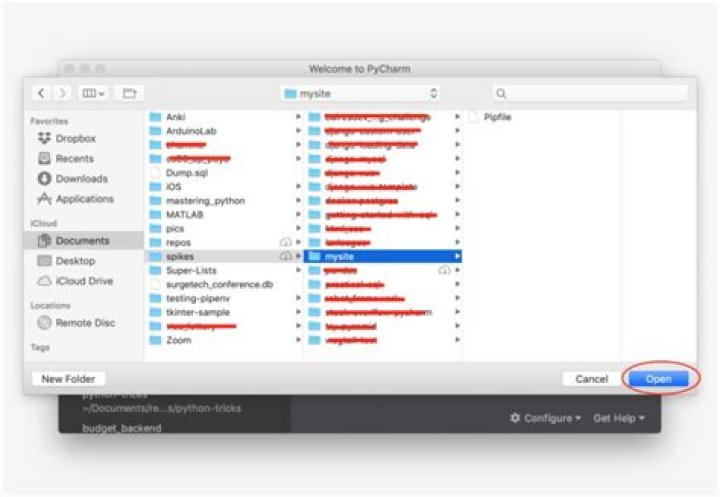
To get a full list of all the Windows defined color names, you can run this magic:
function argb2box { $c = ($args[0] -split '#..(.{2})(.{2})(.{2})'); $r,$g,$b = ("$c" -join(' ')).trim() -split ' '; return "`e[48;2;$([Int32]"0x$r");$([Int32]"0x$g");$([Int32]"0x$b")m `e[0m"; } $sc=[System.Windows.Media.Colors]; $sc | Get-Member -static -Type Property |Select -Expand Name| ForEach { [pscustomobject] @{ ARGB = "$($sc::$_)"; MEOW = $(argb2box "$($sc::$_)") ; Color = $_}} # You can sort on HEX values by adding: # | sort -Property ARGB
You can read more about this here:
1