pandas function read_csv() reads a .csv file. Its documentation is here
According to documentation, we know:
dtype : Type name or dict of column -> type, default None Data type for data or columns. E.g. {‘a’: np.float64, ‘b’: np.int32} (Unsupported with engine=’python’)
and
converters : dict, default None Dict of functions for converting values in certain columns. Keys can either be integers or column labels
When using this function, I can call either pandas.read_csv('file',dtype=object) or pandas.read_csv('file',converters=object). Obviously, converter, its name can says that data type will be converted but I wonder the case of dtype?
2 Answers
The semantic difference is that dtype allows you to specify how to treat the values, for example, either as numeric or string type.
Converters allows you to parse your input data to convert it to a desired dtype using a conversion function, e.g, parsing a string value to datetime or to some other desired dtype.
Here we see that pandas tries to sniff the types:
In [2]: df = pd.read_csv(io.StringIO(t)) t="""int,float,date,str 001,3.31,2015/01/01,005""" df = pd.read_csv(io.StringIO(t)) df.info() <class 'pandas.core.frame.DataFrame'> Int64Index: 1 entries, 0 to 0 Data columns (total 4 columns): int 1 non-null int64 float 1 non-null float64 date 1 non-null object str 1 non-null int64 dtypes: float64(1), int64(2), object(1) memory usage: 40.0+ bytes You can see from the above that 001 and 005 are treated as int64 but the date string stays as str.
If we say everything is object then essentially everything is str:
In [3]: df = pd.read_csv(io.StringIO(t), dtype=object).info() <class 'pandas.core.frame.DataFrame'> Int64Index: 1 entries, 0 to 0 Data columns (total 4 columns): int 1 non-null object float 1 non-null object date 1 non-null object str 1 non-null object dtypes: object(4) memory usage: 40.0+ bytes Here we force the int column to str and tell parse_dates to use the date_parser to parse the date column:
In [6]: pd.read_csv(io.StringIO(t), dtype={'int':'object'}, parse_dates=['date']).info() <class 'pandas.core.frame.DataFrame'> Int64Index: 1 entries, 0 to 0 Data columns (total 4 columns): int 1 non-null object float 1 non-null float64 date 1 non-null datetime64[ns] str 1 non-null int64 dtypes: datetime64[ns](1), float64(1), int64(1), object(1) memory usage: 40.0+ bytes Similarly we could've pass the to_datetime function to convert the dates:
In [5]: pd.read_csv(io.StringIO(t), converters={'date':pd.to_datetime}).info() <class 'pandas.core.frame.DataFrame'> Int64Index: 1 entries, 0 to 0 Data columns (total 4 columns): int 1 non-null int64 float 1 non-null float64 date 1 non-null datetime64[ns] str 1 non-null int64 dtypes: datetime64[ns](1), float64(1), int64(2) memory usage: 40.0 bytes I would say that the main purpose for converters is to manipulate the values of the column, not the datatype. The answer shared by @EdChum focuses on the idea of the dtypes. It uses the pd.to_datetime function.
Within this article in the area about converters, you will see an example of changing a csv column, with values such as "185 lbs.", into something that removes the "lbs" from the text column. This is more of the idea behind the read_csv converters parameter.
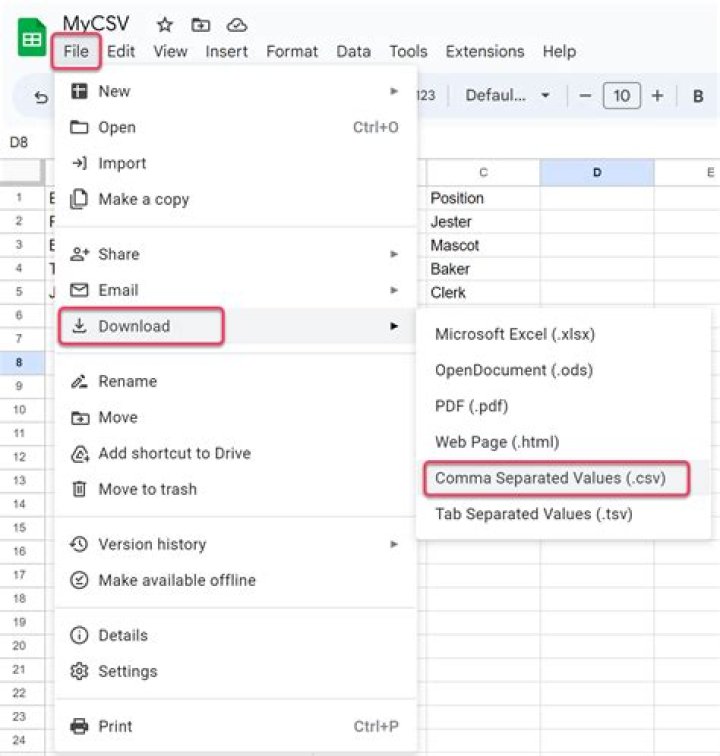
What the .csv looks like (If the image doesn't show up, please go to the article.)
#creating functions to clean the columns w = lambda x: (x.replace('lbs.','')) r = lambda x: (x.replace('"','')) #using converters to apply the functions to the columns fighter = pd.read_csv('raw_fighter_details.csv' , converters={'Weight':w , 'Reach':r }, header=0, usecols = [0,1,2,3]) fighter.head(15) The DataFrame after using converters on the Weight column.