According to my understanding, modern computer monitors mainly display images in raster ways, that is, what we see on the screen are all dots or pixels. What confused me is that we often said ray tracing is not rasterization, but no matter how the 3D world is calculated, shouldn't everything rendered in the computer be finally converted to pixels forming a raster image on the screen? Or if it is that I misunderstood some critical concepts.
11 Answer
As you said correctly, after the calculations, the whole scene is placed in a raster image. Putting pixels in a raster is done after the calculation of each pixel's color. It's the same procedure for any rendering method. Ray tracing and rasterization are techniques for processing primitives and projecting the above mentioned calculation. When you make a distinction between ray tracing and rasterization you ask yourself how the input (primitives, mostly triangles) gets processed.
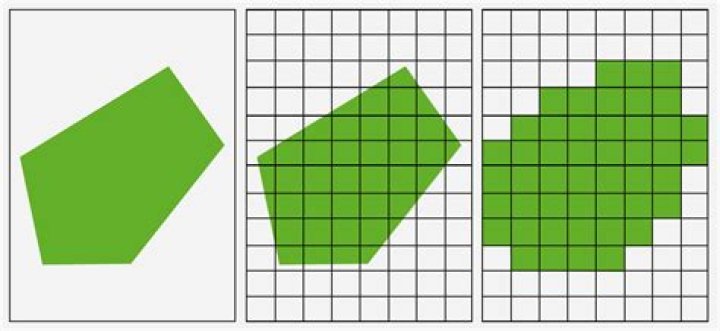
Rasterization is part of the graphics pipeline and determines the pixels covered by a primitive. The main goal is to convert a set of vertices into a raster image. Rasterization is used more often because it is much faster than ray tracing. The complexity is proportional to the number of primitives. The image below shows the procedure of rasterizing using the top-left rule.
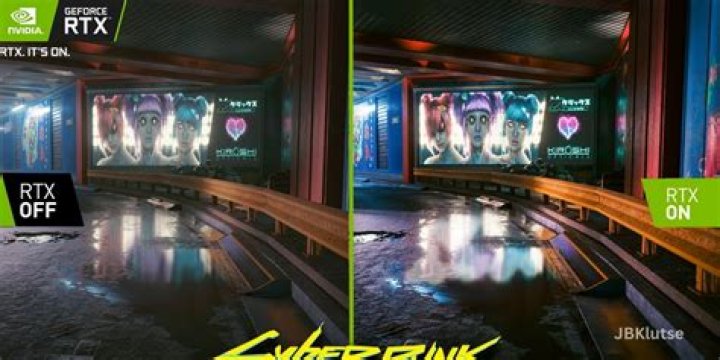
Ray tracing takes a different approach than rasterization. You start by shooting rays out of an imaginary camera into the scene. The scene is processed per pixel and not per primitive. That means the complexity is proportional to the resolution. The advantage is that we can simulate optical effects such as reflection, refraction and scattering. The advantages come with the disadvantage of ray tracing being significantly slower than rasterization. The image below shows the process of shooting rays through the image plane into the scene.
More information:
- Wikipedia | Rasterisation
- Wikibooks | Cg Programming/Rasterization
- Wikipedia | Ray tracing (graphics)